Robots carry out higher at a variety of duties after they draw on a rising frame of revel in. That’s the statement of a crew of researchers hailing from DeepMind, who in a preprint paper suggest one way known as gift sketching. They declare it’s a good way of eliciting human personal tastes to be told a gift serve as — a serve as describing how an AI agent will have to behave — that can be utilized to retrospectively annotate all historic information, accrued for various duties with predicted rewards for the brand new assignment. This annotated information set can then be used to be told manipulation insurance policies, the crew says, or likelihood distributions over movements given positive states, with reinforcement studying from visible enter with out interplay with an actual robotic.
The paintings builds on a DeepMind learn about printed in January 2020, which described one way — continuous-discrete hybrid studying — that optimizes for discrete and continual movements concurrently, treating hybrid issues of their local shape. As one thing of a precursor to that paper, in October 2019, the Alphabet subsidiary demonstrated a singular method of shifting abilities from simulation to a bodily robotic.
“[Our] way makes it conceivable to scale up RL in robotics, as we now not wish to run the robotic for every step of studying. We display that the educated batch [reinforcement learning] brokers, when deployed in genuine robots, can carry out a number of difficult duties involving a number of interactions amongst inflexible or deformable items,” wrote the coauthors of this newest paper. “Additionally, they show a vital diploma of robustness and generalization. In some instances, they even outperform human teleoperators.”
Because the crew explains, on the center of gift sketching are 3 key concepts: environment friendly elicitation of consumer personal tastes to be told gift purposes, automated annotation of all historic information with realized gift purposes, and harnessing the information units to be told insurance policies from saved information by means of reinforcement studying.
As an example, a human teleoperates a robotic with a six-degree-of-freedom mouse and a gripper button or a hand held digital fact controller to supply first-person demonstrations of a goal assignment. To specify a brand new goal assignment, the operator controls the robotic to supply a number of a success (and optionally unsuccessful) examples of finishing the duty, and those demonstrations assist to bootstrap the gift studying by means of offering examples of a success habits with prime rewards.
Within the researchers’ proposed way, all robotic revel in — together with demonstrations, teleoperated trajectories, human play information, and revel in from the execution of both scripted or realized insurance policies — is amassed into what’s known as NeverEnding Garage (NES). A metadata device carried out as a relational database guarantees it’s accurately annotated and queried; it attaches setting and coverage metadata to each trajectory, in addition to arbitrary human-readable labels and gift sketches.
Within the reward-sketching segment, people annotate a subset of episodes from NES (together with task-specific demos) with annotations of gift, the use of one way that permits a unmarried consumer to provide masses of annotations consistent with minute. Those annotations feed right into a gift type that’s then used to expect gift values for all revel in in NES, so that each one historic information in a coaching coverage for a brand new assignment may also be leveraged with out requiring guide annotation of the entire repository.
An agent is educated with 75% of the batch drawn from the whole thing of NES and 25% from the information particular to the objective assignment. Then, it’s deployed to a robotic, which permits the choice of extra revel in for use for gift sketching or reinforcement studying.
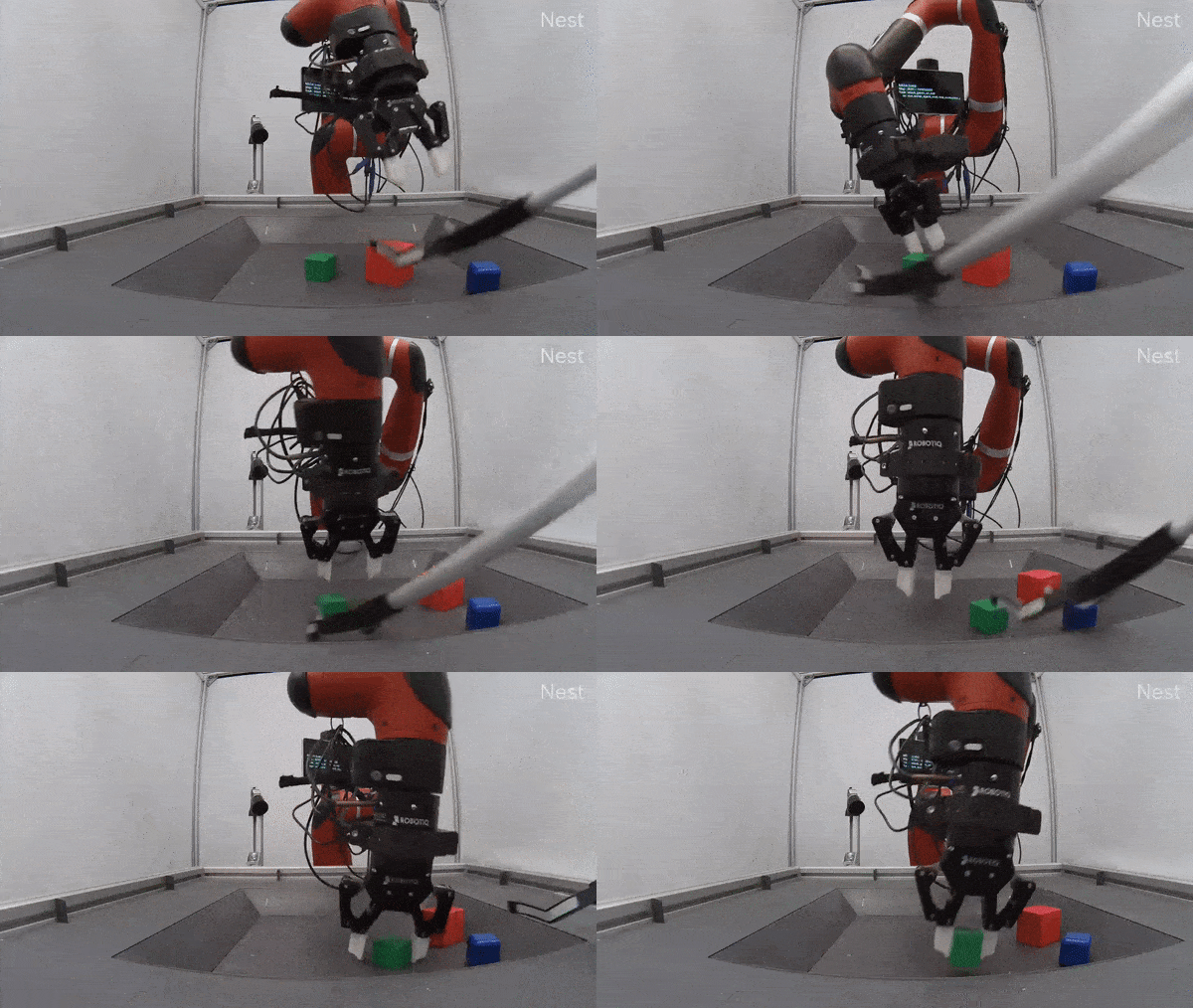
In experiments, the DeepMind crew used a Sawyer robotic with a gripper and a wrist force-torque sensor. Observations have been supplied by means of 3 cameras round a cage, in addition to two wide-angle cameras and one intensity digicam fixed on the wrist and proprioceptive sensors within the arm. In general, the crew accrued over 400 hours of multiple-camera movies of proprioception — i.e., belief or consciousness of place and motion) — and movements from habits generated by means of human teleoperators, in addition to random, scripted, and insurance policies.
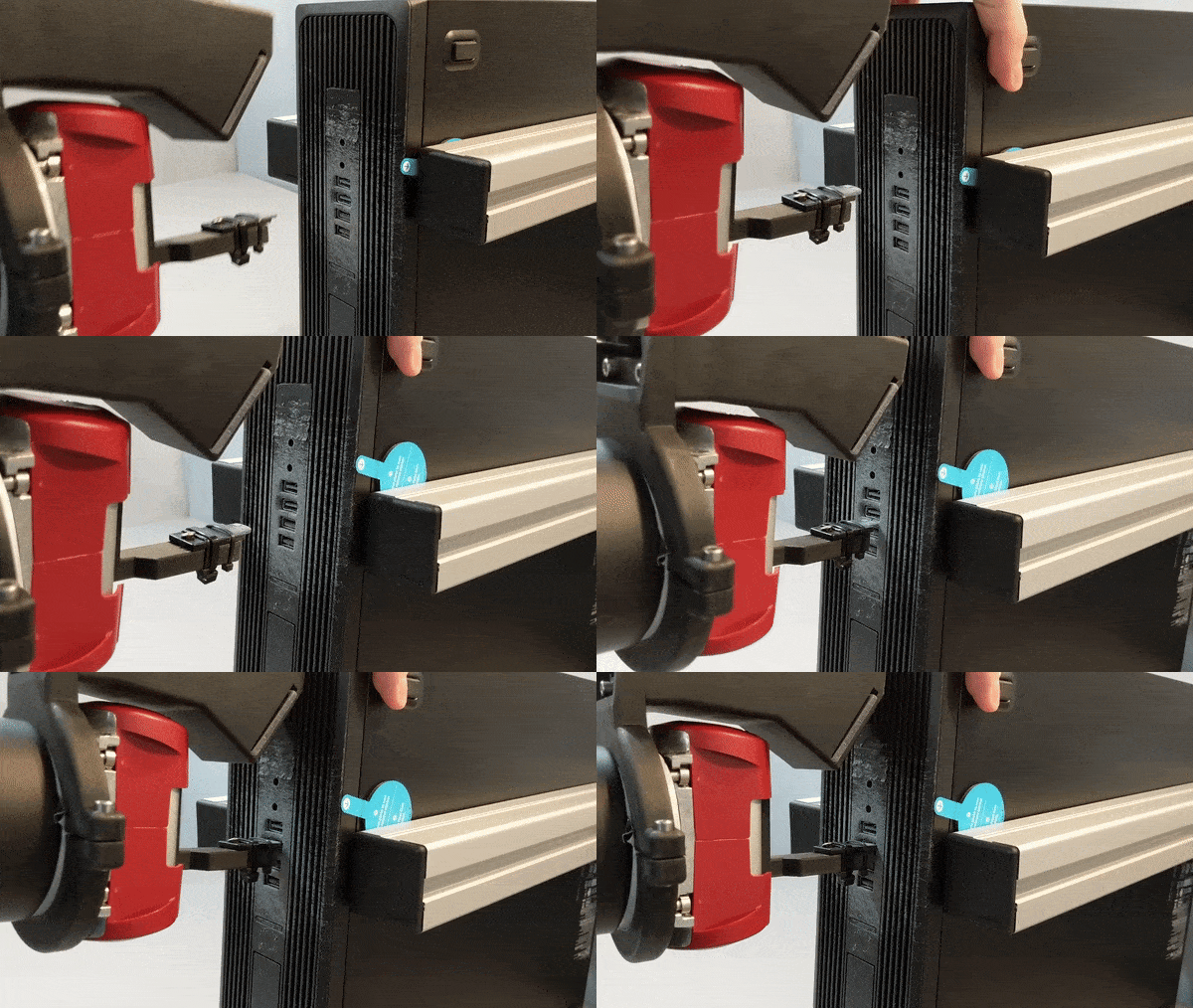
The researchers educated a number of reinforcement studying brokers in parallel for 400,000 steps and evaluated probably the most promising at the real-world robotic. Tasked with lifting and stacking oblong items, the Sawyer effectively lifted 80% of the time and stacked 60% of the time, and 80% and 40% of the time when the ones items have been situated in “hostile” techniques. Most likely extra impressively, in a separate assignment involving the right insertion of a USB key into a pc port, the agent — when supplied gift sketches from over 100 demonstrators — reached over 80% good fortune charge inside of eight hours.
“The multi-component device lets in a robotic to unravel a number of difficult duties that require skillful manipulation, contain multi-object interplay, and include many time steps,” wrote the researchers. “There’s no wish to fear about put on and tear, limits of genuine time processing, and most of the different demanding situations related to working genuine robots. Additionally, researchers are empowered to coach insurance policies the use of their batch [reinforcement learning] set of rules of selection.”
They depart to long run paintings figuring out techniques to attenuate human-in-the-loop coaching, and to attenuate the brokers’ sensitivity to “vital perturbations” within the setup.


